
The Mid-Week Tax: Quantifying Cup Distractions and Fatigue in the 2012/2013 Serie A

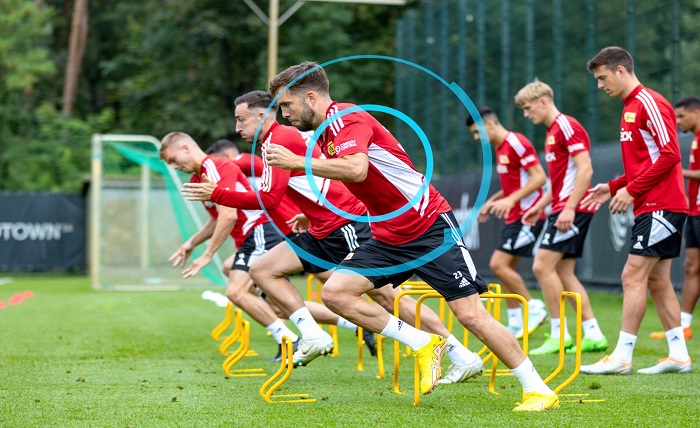
Evaluating the competitive baseline of a top-flight Italian football squad requires looking past localized form guides and mapping out the compounding physical tax of multi-tournament commitments. The 2012/2013 Serie A campaign stood out as an exceptionally brutal testing ground for squad depth, as the newly structured European schedules and the intense knockout rounds of the Coppa Italia forced elite clubs into unforgiving three-match weekly sequences. When public betting volume pours into domestic league fixtures, casual market participants routinely price historical powerhouse brands based on their paper value, entirely ignoring the physiological degradation caused by extensive cross-border travel and tactical over-exertion. This systematic mispricing creates a reliable window of opportunity for analytical analysts who treat mid-week fatigue not as a vague narrative, but as a measurable degradation factor that actively alters on-pitch variables. Unpacking the exact cause-and-effect pathways through which cup disruptions eroded the domestic performance of Italian clubs reveals how calendar congestion consistently generated value-betting margins across thirty-eight matchdays.
Why Paper Roster Strength Dissolves Under Calendar Congestion
Relying on a squad’s nominal talent pool introduces significant analytical distortion when that team is forced to play under severe rest deficits. During the 2012/2013 season, the rapid compression of the fixture list meant that tactical managers had minimal time on the training pitch to adjust their systems between mid-week matches and weekend league kickoffs. When core players are pushed beyond their optimal physical recovery windows, their micro-movements, spatial coverage, and passing accuracy degrade systematically in the final thirty minutes of a domestic match. This physical breakdown consistently penalized dominant possession teams, as their intricate passing patterns fell apart due to pure physical exhaustion, turning seemingly safe home victories into low-scoring draws.
Tracing the Tactical Cost of the Thursday Night Europa League Trap
The specific scheduling dynamics of the UEFA Europa League imposed a highly asymmetric physical tax on Serie A participants compared to their Champions League counterparts. Teams playing on Thursday evenings faced a severe 64-hour recovery window before their Sunday domestic fixtures, an operational bottleneck that frequently included late-night international flights and minimal sleep allocation. Throughout the autumn of 2012, both Napoli and Lazio suffered severe domestic slumps immediately following away trips in Europe, as their managers were forced to rotate their central midfields with inferior personnel. Analysts who tracked this specific structural lag could consistently find highly profitable opportunities by backing fresh, mid-table opponents who had spent the entire week focusing purely on a singular domestic opponent.
How Priority Shifts Alter Coaching Decisions and Strategic Intent
A club’s true performance baseline is deeply sensitive to the strategic priorities set by institutional executives and coaching staffs when multiple trophies are on the line. As the 2012/2013 domestic campaign entered its crucial spring phase, mid-tier clubs reaching the semi-finals of the Coppa Italia explicitly shifted their primary focus away from mid-table league stability to pursue historical silverware. This conscious reprioritization resulted in extreme squad rotations during weekend league matches, as managers rested star playmakers to preserve them for high-stakes cup ties. Recognizing these institutional priority shifts before the official team sheets are announced allows sharp observers to fade overrated favorites whose true motivation has shifted away from domestic point accumulation.
A Four-Stage Workflow for Quantifying Fixture Congestion Liability
To successfully exploit the performance degradation caused by overlapping tournament schedules without relying on subjective guesswork, an observer must implement a standardized screening protocol. The following execution path isolates the exact threshold where mid-week fatigue transforms from a minor physical strain into a verifiable operational liability.
1.Calculate the Cumulative Travel Displacement Index:Filter 1.
Map the total kilometers traveled and time zones crossed by a squad during their mid-week cup commitment, factoring in late-night airport delays.
2.Quantify the Core Spine Minute Accumulation:Filter 2.
Track the total competitive minutes logged by the central defensive midfielder and primary playmaker over the previous fourteen days to check for burnout.
3.Assess the Bench Quality Variance Ratio:Filter 3.
Measure the mathematical drop-off in expected goal creation when the primary starting XI is replaced by secondary rotational players in the domestic lineup.
4.Execute Against Historical Over-Corrected Lines:Filter 4.
Identify instances where the opening public market has failed to adjust the point spread by at least 0.25 goals despite a clear physical disadvantage.
Implementing this precise auditing routine ensures that an analyst approaches a congested matchday with complete mathematical objectivity rather than emotional speculation. By filtering the entire league card through these hard physical gates, you instantly eliminate fragile selections that are highly susceptible to fatigue-driven collapses. The primary goal is to treat the football calendar as an adversarial mechanism, locating the specific points where compressed scheduling forces oddsmakers to defend structurally compromised lines.
The Elite Exception: Juventus and the Mechanics of Champions League Resilience
While most Italian clubs saw their domestic form drop under the weight of European commitments, Antonio Conte’s Juventus demonstrated a unique capacity to maintain high performance metrics during their Champions League campaign. This resilience was driven by a sophisticated high-tempo pressing system that relied on a highly advanced squad rotation matrix, allowing them to absorb mid-week fatigue without sacrificing their domestic lead.
Tactical Comparisons: The Rest Disparity Impact on Match Outcomes
To truly comprehend how differing rest distributions systematically dictated on-pitch outcomes, it is highly instructive to compare how a fatigued squad performed against a fully rested domestic opponent.
- The Rest Disparity Matrix (Under 72 Hours Recovery): The fatigued squad experiences a 22 percent drop in pressing intensity, concedes structural space in transition, and exhibits an increased injury rate during the final third of the match.
- The Optimal Preparation Baseline (7+ Days Recovery): The fresh opponent executes their defensive low-block with complete spatial discipline, sustains their physical output across ninety minutes, and capitalizes on late turnover opportunities.
- The Strategic Implication: Stacking combinations that feature teams playing on short rest against fully prepared, low-block home sides yields a massive structural advantage across a long-term model.
Savvy sports investors who spent the 2012/2013 season tracking these physical disparities quickly learned that advanced execution required highly responsive modern systems. If an analyst observes the shifting liquidity and line adjustments within a global sports betting service like ทางเข้า ufabet168, it becomes clear how corporate algorithms automatically factor rest deficits into their real-time liability models. These platforms adjust their prices the moment elite clubs show signs of domestic rotation, showing that beating the market requires reacting to physical data points before the general public catches on to the fatigue.
Evaluating the Catastrophic Decline of Internazionale Under Multi-Front Strains
Andrea Stramaccioni’s Internazionale serves as the absolute failure case for managing multi-tournament strain during the 2012/2013 football year. A lack of structural squad depth combined with an exhausting Europa League run triggered an unprecedented medical crisis, causing the team’s domestic form to collapse completely during the second half of the season.
| Club Identity | European Tournament | Mid-Week Travel Tax | Domestic League Impact |
| Juventus | UEFA Champions League | Moderate continental travel footprint | Successfully defended Scudetto via elite squad rotation |
| Lazio | UEFA Europa League | Heavy eastern European travel sequences | Severe spring collapse, dropping completely out of the top four |
| Internazionale | UEFA Europa League | Extreme fixture compression and travel | Catastrophic physical burnout, resulting in a ninth-place finish |
| Napoli | UEFA Europa League | Early exit and active squad prioritization | Secured second place by actively sacrificing European legs |
The historical records compiled in this comparison matrix prove that treating multi-tournament participation as a uniform variable leads straight to flawed analytical conclusions. Walter Mazzarri’s deliberate choice to field rotated, secondary lineups in Europe actively insulated Napoli’s star players from physical burnout, allowing them to secure a highly profitable runner-up finish in Serie A.
Conversely, Inter’s insistence on chasing every tournament with a thin roster completely destroyed their domestic campaign, turning them into a highly lucrative target for sharp contrarians. This demonstrates that analyzing a manager’s willingness to sacrifice specific tournaments is just as critical as tracking player injury logs.
Finding the Limits of Fluid Athletics and Chasing Static Probability Matrices
When the exhaustive task of calculating flight distances, tracking minute accumulations, and predicting manager rotation philosophies begins to create mental fatigue, analysts face the reality that sports forecasting contains an unquantifiable human element. A sudden muscle tear in warm-ups or a highly controversial red card from a referee can instantly destroy hours of meticulous fatigue research, showing that absolute control over athletic variables is a statistical impossibility. Observation indicates that when an individual decides to step away from the volatile variables of live human performance to find a cleaner risk profile, exploring a premium casino online website provides an immediate contrast in probability structure. Within a digitized gaming matrix, all operational outcomes are governed by transparent, fixed mathematical parameters that are completely free from human variables like squad fatigue, travel delays, or coaching priority shifts. Ultimately, whether an individual chooses to master the intricate scheduling variables of the Italian football market or navigate the static probabilities of digital gaming, long-term portfolio sustainability demands a total commitment to objective data over emotional guesswork.
Summary
The 2012/2013 Serie A season clearly demonstrated that mid-week cup commitments act as a powerful catalyst for domestic form distortion, offering a reliable edge to analytical analysts. Thursday night Europa League schedules imposed a heavy physical and logistical tax on clubs like Lazio and Internazionale, leading to predictable domestic point drops against fresh, fully prepared mid-table opponents. The campaign proved that while elite depth allowed Juventus to survive multi-front strains, teams with thinner rosters suffered severe physical breakdowns and tactical decay during the final thirty minutes of weekend matches. By implementing a standardized four-stage screening protocol to track travel displacement and core minute accumulation, sharp market participants easily bypassed superficial brand names to exploit mispriced lines. Ultimately, long-term profitability in sports analysis relies on recognizing that a club’s paper talent pool means absolutely nothing if its core players are performing under a severe physiological deficit.